T
h
i
r
u
m
u
r
u
g
a
n
S
C
U
L
P
T
U
R
E
A
R
T
S
P
T
E
L
T
D
Welcome to Thirumurugan Sculpture Arts Pte Ltd –
Get a Free Quote
- Email : tmsa1910@gmail.com
- Call : +65 9109 1853

About Thirumurugan sculpture arts pte ltd
our clients, oue employees, and our community through our commitmrnt to
leadership, excellence in craft, and attention to detail.
Arulmigu Velmurugan
Ganamuneeswarar Temple
Arulmigu Velmurugan Ganamuneeswarar Temple
A landmark spiritual sanctuary in Sengkang uniting devotion to Lord Murugan and Lord Ganesha through exceptional architectural craftsmanship.
Arulmigu Velmurugan Ganamuneeswarar Temple, Sengkang
Completed: 17th February 2017 | Location: Sengkang, Singapore | Deities: Lord Velmurugan (Murugan) and Lord Ganamuneeswarar (Ganesha) | Significance: Community Landmark Temple
The Arulmigu Velmurugan Ganamuneeswarar Temple in Sengkang represents our commitment to bringing traditional temple excellence to Singapore's rapidly developing residential neighborhoods. This dual-deity temple, honoring both Lord Murugan and Lord Ganesha, serves as a spiritual anchor for the growing community, combining authentic Dravidian architecture with thoughtful adaptation to suburban Singapore's unique context.
17th February 2017

--- Project Director & Community Liaison"In Sengkang's modern landscape, we created a timeless sanctuary where ancient devotional traditions flourish and generations unite in worship of the divine sons of Shiva."
Spiritual Landmark in Sengkang
Completed in February 2017, the Arulmigu Velmurugan Ganamuneeswarar Temple stands as a significant spiritual landmark in Sengkang, one of Singapore's newest and fastest-growing residential districts. While Sengkang is known for its modern HDB estates and contemporary urban planning, this temple provides essential cultural continuity, offering residents a place to maintain their Hindu heritage and spiritual practices. The temple's location in a family-oriented neighborhood makes it particularly important for young families seeking to pass religious traditions to their children. Our design approach recognized this unique role, creating a welcoming, accessible temple that serves both as a center of orthodox worship and a community gathering space for cultural education, festival celebrations, and social cohesion.
Divine Brothers: Murugan and Ganesha
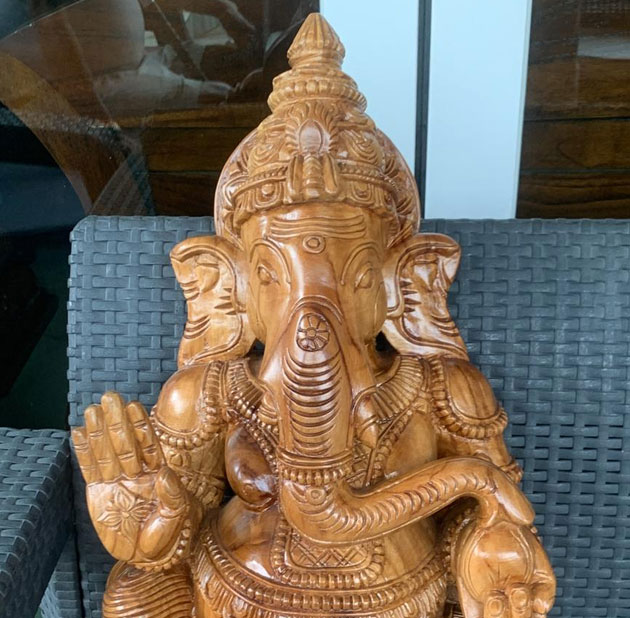
The temple's dedication to both Lord Velmurugan (Murugan) and Lord Ganamuneeswarar (Ganesha) celebrates the divine brotherhood of Lord Shiva's two sons, each embodying complementary aspects of wisdom, power, and devotion. Lord Murugan, the warrior god who vanquishes evil and grants spiritual wisdom, is particularly revered in Tamil culture. Our main Murugan deity captures his youthful vigor and divine radiance, depicted with his characteristic vel (spear), peacock mount, and six faces representing omniscience. Lord Ganesha, the remover of obstacles and lord of beginnings, receives equal reverence in a beautifully appointed sanctum. Our Ganesha sculpture showcases traditional iconography—the elephant head symbolizing wisdom, the large belly representing abundance, the broken tusk denoting sacrifice, and the mouse vahana (vehicle) symbolizing humility. The presence of both deities allows devotees to seek Ganesha's blessings for new undertakings and Murugan's guidance for spiritual progress within one sacred complex.
Architectural Design & Traditional Elements
The temple's architecture follows authentic South Indian Dravidian principles adapted thoughtfully for suburban Singapore's context. The rajagopuram, while appropriately scaled for the neighborhood, maintains traditional multi-tiered structure adorned with vibrant sculptures of deities, celestial beings, and mythological narratives. We designed the gopuram to be visible from surrounding residential blocks, serving as a visual landmark that reminds residents of their spiritual heritage amidst modern urban development. The main mandapam provides generous space for community gatherings, featuring traditional pillars with yali carvings, lotus capitals, and decorative brackets. The dual sanctums are positioned according to vastu principles, ensuring proper orientation and energy flow for both primary deities while accommodating subsidiary shrines for associated gods including Lord Shiva, Goddess Parvati, Lord Subramaniam's consorts Valli and Deivayanai, and other deities completing the divine pantheon.
Sculptural Excellence & Iconographic Authenticity
Our sculptural work for this temple demonstrates mastery across diverse iconographic traditions. The Velmurugan deity required particular expertise—capturing the youthful beauty and martial prowess that characterizes Murugan while conveying the deep spiritual wisdom he represents. Every detail receives meticulous attention: the vel held at the perfect angle, the peacock rendered with individual feather details, the subtle smile conveying divine compassion, and the ornate jewelry befitting a divine prince. The Ganesha sculpture showcases our ability to work within different proportional systems—the characteristic large head, rotund body, and delicate extremities balanced in perfect harmony. Supporting sculptures include the divine parents Shiva and Parvati, the 63 Nayanmars (Shaivite saints), and the Ashta Dikpalas (guardians of eight directions), each carved with distinctive attributes and expressions that bring personality to stone.
Community-Centered Design
Understanding the temple's role in a young, family-oriented neighborhood influenced numerous design decisions. We created child-friendly spaces where young devotees can participate comfortably in worship, incorporated educational elements that help children learn about Hindu deities and stories, designed circulation patterns that accommodate large festival crowds while maintaining intimate worship spaces, and provided amenities supporting community activities beyond religious ceremonies. The temple includes dedicated areas for Tamil language classes, classical music and dance instruction, youth programs, and cultural workshops—transforming it from merely a worship space into a comprehensive cultural center that strengthens community bonds and preserves heritage across generations.
Material Selection & Tropical Durability
Singapore's tropical climate—intense sun, heavy rainfall, high humidity—demands careful material selection and construction techniques to ensure temple longevity. We sourced premium granite varieties known for weather resistance and color stability, employed specialized finishing techniques that protect against moisture penetration and biological growth, designed drainage systems that prevent water accumulation and structural damage, and selected paints and coatings formulated for tropical conditions. The result is a temple that maintains its beauty and structural integrity despite challenging environmental conditions, ensuring it will serve the Sengkang community for many decades without requiring extensive restoration.
Festival Celebrations & Community Life
Since its consecration in 2017, the temple has become the focal point for major Hindu festivals in Sengkang. Thaipusam, the most important festival for Murugan devotees, attracts thousands who participate in kavadi processions, piercing ceremonies, and all-night vigils. Vinayaka Chaturthi celebrates Ganesha's birthday with special pujas, cultural programs, and community feasts. Other festivals including Navaratri, Pongal, and Deepavali transform the temple into vibrant celebration spaces filled with music, dance, lights, and devotional fervor. These festivals not only serve religious purposes but strengthen social networks, welcome new residents into the community, expose non-Hindu neighbors to Tamil culture, and create cherished childhood memories that ensure the next generation maintains connection to their heritage.
Integration with Modern Sengkang
The temple's success lies partly in how well it integrates with Sengkang's modern urban fabric while maintaining its distinctive traditional character. We designed the temple to be a good neighbor—managing sound levels during ceremonies to respect surrounding residents, providing adequate parking to minimize street congestion during festivals, maintaining attractive landscaping that enhances neighborhood aesthetics, and opening the temple for community events that build bridges with non-Hindu residents. This thoughtful integration demonstrates that traditional temples can thrive in contemporary settings when designed with sensitivity to both religious requirements and civic responsibilities.
Preservation of Tamil Hindu Heritage
For Singapore's Tamil Hindu community, particularly those living in newer estates like Sengkang, this temple serves a vital role in cultural preservation. Many young families in Sengkang are first-generation Singaporeans or recent immigrants seeking to maintain connection with ancestral traditions while embracing modern Singaporean identity. The temple provides this connection—a space where Tamil is spoken, traditional rituals are performed correctly, classical arts are taught, religious knowledge is transmitted, and community bonds are strengthened. Our architectural and sculptural work supports this cultural mission by creating an authentically traditional environment that transports devotees to the sacred atmosphere of South Indian temples, regardless of the modern cityscape outside.
Project Execution & Community Collaboration
The successful completion of the Arulmigu Velmurugan Ganamuneeswarar Temple resulted from close collaboration with the temple committee, religious advisors, and the broader Sengkang community. We conducted extensive consultations to understand community needs, preferences, and aspirations for their temple. Regular progress meetings kept stakeholders informed and engaged. We accommodated special requests and cultural preferences while maintaining overall design integrity. This collaborative approach ensured the final temple reflected genuine community ownership—not just a structure built for them but one built with them, embodying their collective devotion, aspirations, and identity.
Technical Innovation & Traditional Values
While honoring traditional temple architecture and sculpture, we incorporated appropriate modern technologies and construction methods. Structural engineering ensures safety standards exceeding regulatory requirements. Climate control systems protect sensitive areas without compromising traditional aesthetics. Lighting design highlights sculptural beauty while supporting various religious ceremonies. Sound systems distribute chanting and music evenly throughout temple spaces. Security systems protect valuable ritual items and temple property. These modern interventions remain invisible, supporting traditional practices without intruding on the devotional atmosphere or violating architectural authenticity.
Legacy in Sengkang
Seven years since completion, the Arulmigu Velmurugan Ganamuneeswarar Temple has firmly established itself as a beloved community institution in Sengkang. Residents measure time by temple festivals, children grow up attending religious classes here, families mark major life events—births, coming-of-age ceremonies, weddings—with temple blessings. The temple's presence has influenced Sengkang's character, adding cultural diversity and spiritual depth to what might otherwise be just another modern residential district. Our work created more than a building—we helped establish a living tradition, a community anchor, and a bridge connecting past and future. As Sengkang continues growing and evolving, this temple will remain a constant, reminding residents that amidst change and modernization, timeless spiritual truths and cultural heritage deserve reverence, preservation, and celebration.